


I`ve visited Epidaurus many times in the past. But last week another road lead me there for one more (and definitely not the last!) time. Apart from the breath-taking ancient theatre that Epidaurus is known worldwide, there you can also find the sanctuary of Asclepius. A son of Apollo which is known in the ancient world as the God of medicine. And as a God, amongst the many epithets he bears, one is "Paean" (The Healer) and he shares it with Apollo. Thats the reason I choose it as a title of this thread so to somehow honour both the father and son.
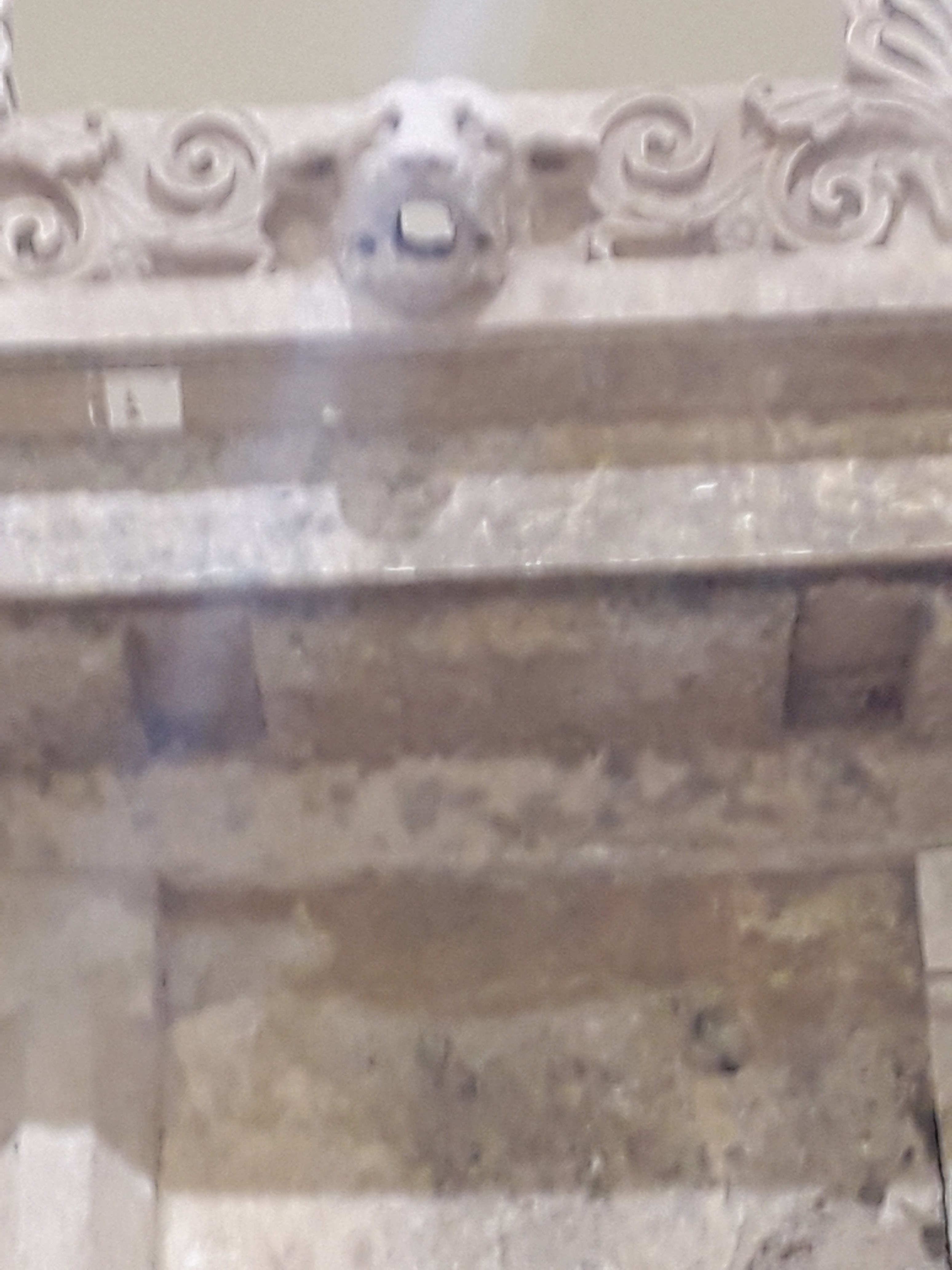
In Epidaurus most of the ancient findings are diplayed outdoors but there is also a small museum inside this area. What I noticed this time is that amongst the saved pieces of the sanctuary there is many marble animal decorations. Mostly lionheads but also dogheads and boarheads. So I thought to take photo of them one by one as as far I remember its rare to see so many of them in one plac alone. Here I present them to you below in a series of photos. Some of them might look that its the same, but its not. All photos are from different pieces. Some of them are not really clear and thats because it was a cloudy day outside (so not a lot of sunlight) and also the light in the museum halls was a bit low at some areas. But still you can get a good picture of how they looked like. Majestic!



Ernst Jünger - A short letter to his brother, Friedrich "Fritz" Georg,
In the field, 18th of June 1917


By
C. DEAN ANDERSSON
Once upon a time in Sweden, a musician named Quorthon named a rock band after the Countess Bathory, who bathed in blood.
Once upon a time in Texas, in 1988 I wrote a horror novel about the Countess Bathory titled Raw Pain Max, Book 2 in my Texas Horror Trilogy (Torture Tomb, Raw Pain Max, and Fiend).
Raw Pain Max features a man and woman who love metal music. But the woman is more than she seems. She is a reincarnation of Countess Bathory.
While writing RPM, I discovered there was a rock band in Sweden named after the Countess. The song “Woman of Dark Desires” on Bathory’s Under the Sign of the Black Mark is about her. My novel needed mood-setting quotations at the beginning. A quote from a band named after the Countess would be perfect. I wrote to Bathory’s record company and asked permission to use a quote from “Woman of Dark Desires. Quorthon himself answered and said, “Quote the whole damned album, if you want!”
I wrote back and thanked him and, because he was from Sweden, as was my father, I sent him copies of my Viking sword and sorcery fantasy trilogy, Warrior Witch of Hel, Death Riders of Hel, and Werebeasts of Hel, originally published under my pen name, Asa Drake. The books tell of the adventures of a woman warrior named Bloodsong in a Viking world of Gods and Heroes.

In other letters, Quorthon talked about the “sound pictures” he was creating for a new album, Blood Fire Death. He also mentioned obtaining permission from a Swedish historical museum to play an ancient musical instrument, a Viking Age horn, to add authenticity to the album. He explained that he was trying something new. He hoped Bathory’s fans would like it. He was including normal speed-thrash metal tracks, but he was also adding tracks to express his love of his native land and its history. He was determined that Sweden’s pride in its heritage would not vanish. And so, when Bathory’s Blood Fire Death was released, Viking Metal was born.
My Viking Heroic Fantasy novels evidently struck Quorthon as having been drawn from the same Well of Inspiration as his Viking Metal music. When Blood Fire Death was released, Quorthon sent me a Bathory sweatshirt with the Blood Fire Death art, plus the vinyl album autographed by himself and the other two members of Bathory. He also sent a Bathory Hordes V.I.P. membership card. You can read a scan of the letter he sent me along with all these treasure at the bottom of this article.

YOU CAN READ THE FULL ARTICLE HERE
As of today, one year ago, Hjarulv Henker crossed at the realm of death. His earthly presence is may be gone but through his music, writings and several of his other artistic creations his spirit will always be here, to haunt forever!
Hail Hjarulv!


Very few suspect that the holidays [i.e., Catholic holy days] of today, in the century of skyscrapers, radio, great movements of the masses, are celebrated and continue . . . a remote tradition, bringing us back to the times when, almost at the dawn of humanity, the rising motion of the first Aryan civilization began; a tradition, in which, moreover, the great voice of those men is expressed rather than a particular belief.
A fact unknown to most must be first of all remembered, viz., that in its origins the date of Christmas and that of the beginning of the new year coincided, this date not being arbitrary, but connected to a precise cosmic event, namely, the Winter Solstice. The Winter Solstice falls in fact on December 25, which is the date of Christmas, subsequently known, but which in its origins had an essentially solar significance. That appears also in ancient Rome: the date of Christmas in ancient Rome was that of the rising of the Sun, the unconquered God, Natalis solis invicti. With that, as the day of the new sun — dies solis novi — in the imperial epoch brought the beginning of the new year, the new cycle. But this “solar birth” of Rome in the imperial period, in its turn, referred to a somewhat more remote tradition of Nordic-Aryan origin. Of the reset, Sol, the solar divinity, appeared already among the dii indigetes, that is, among the divinities of Roman origin, passed on from even more distant cycles of civilization. In reality, the solar religion of the imperial period, in a large measure had the meaning of a recovery and almost of a rebirth, unfortunately altered by various factors of decomposition, of a very old Aryan heritage.
In the Aryan and Nordic tradition and in Rome itself, the same theme had an importance not only religious and mystical, but sacred, heroic and cosmic at the same time. It was the tradition of a people, to whom the same nature, the same great voice, which I wrote about , at that date, a tradition of a mystery of resurrection, of the birth or rebirth of a beginning not only of “light” and new life, but also of Imperium, in the highest and most august meaning of the word.
JULIUS EVOLA - La Difesa della razza (1940)

