
Wednesday, March 29, 2017


Saturday, March 25, 2017
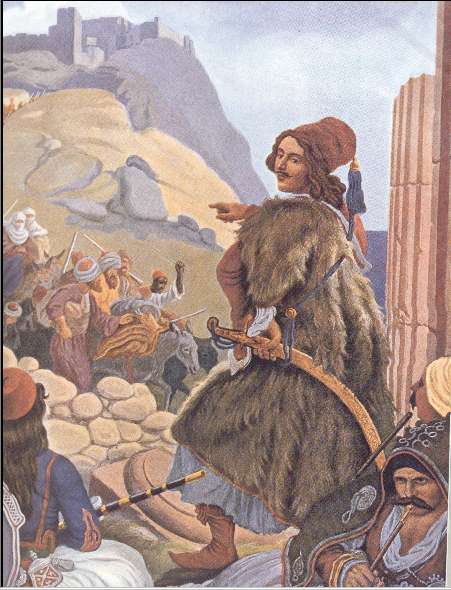
25th of March 1821 - The Hellenic Rebirth

“Vosstan, o Gretsiia, vosstan”
Arise, o Greece, Arise!
Not in vain you strained all your forces,
Not in vain had been violently shaken
Olympus, Pindus, and Thermopylae.
Under the peaks of their ancient sky
The youthful liberty appeared,
And on the grave of Pericles;
And the sacred marbles of Athens.
Land of the heroes and gods
Break forever the chains of slavery
While singing the inspired songs
Of Tyrtaeus, Byron, and Rhigas!
Alexander Pushkin
SEE ALSO:
Friday, March 17, 2017
Norwegian Black Metal - Anno 1992

"At that time black metal wasn’t a term. Enslaved did their Viking Metal, Immortal did their Holocaust Metal etc but we were so tight knitted back then – completely into the atmosphere. [We were]going into the woods by night, have candles/torches exploring old Nazi-bunkers and caves around Bergen, playing role playing all night until the morning light killed the magic – that was what my world and art was about. Darkness, grimness, fantasy and friends, I didn’t draw one single colorful happy drawing those years – not one"
Jannicke Wiese Hansen
(Source: Graphic Nature)

SEE ALSO:
Monday, March 13, 2017
At The Hunting Mountain of Artemis

Kithairon (or Cithaeron) is mountain in Attica that I`ve wrote very few words about it (see the related thread at the end of this post). As almost every other mountain around this vast region, it has an endless number of myths written in its historical past. A Gods , Heroes and demigod's dwelling giant that once stood in-between two rivals of the ancient Hellenic world. Athens and Thebes.

During the winter its hard to visit it as the weather up there is harsh. Around that time of the year and onwards, some days can make a visit really pleasant. And so it happened. Here are some photos from such a visit, taken few days ago....
All photos by Irene


Previous Related Thread:
Wednesday, March 8, 2017
The Song of Amergin

I am Wind on Sea,
I am Ocean-wave,
I am Roar of Sea,
I am Stag of Seven Tines,
I am a Hawk on a Cliff,
I am shining tear of the Sun,
I am Fairest among Herbs,
I am Boar for Boldness,
I am Salmon in Pool,
I am a Lake on a Plain,
I am a Hill of Poetry,
I am a Word of Skill,
I am the Point of a Weapon (that pours forth
combat),
I am God who fashions Fire for a Head.
Who knows the secrets of the
Unhewn Dolmen?
Who (but I) announces the Ages of the Moon?
Who (but I) know the place where falleth
the Sunset?
Who calls the Cattle from the House of Tethra?
On whom do the cattle of Tethra smile?
Who is the troop, the god who fashions edges
in a fortress of gangrene?
(I am) a Song on a Spear,
an Enchantments of Wind.

“It has been suggested that this poem, which is a tissue of obscure formulas that puzzled even the mediaeval commentators, echoes the druidic doctrine of metempsychosis; but it simply expressed the pride of the sorcerer, whose art has just brought him triumph over his enemies, and who now parades his talents and declares his power. For we know that one of the gifts which all primitive peoples attribute to their sorcerers is that of shape-shifting.”
Marie-Louise Sjoestedt - Celtic Gods and Heroes (1940)
SEE ALSO:
The Cross and The Dragon: The Pagan Roots of Irish Crosses
The truly admirable story behind ABSU's "Tara" cover painting
Ancient heritage site destroyed by Irish government
Sunday, February 26, 2017
Barbarian Rhymes - The Untitled Poetry of Robert E Howard

Some untitled poems by the master of dark heroic fantasy
Robert E Howard

(from left to right: R.E.Howard - Truett Vinson - Tevis Clyde Smith)
"A hundred years the great war raged..."
(From a letter to Tevis Clyde Smith, August 4, 1923)
A hundred years the great war raged.
White against yellow and brown.
And the West like a furious tiger uncaged,
Fell, but dragged the Orient down.
White against yellow and brown.
And the West like a furious tiger uncaged,
Fell, but dragged the Orient down.
"I am the Spirit of War!..."
(From a letter to Tevis Clyde Smith, January 30, 1925)
I am the Spirit of War!
My hands are red with gore.
They know my heel
Where the clash of steel
Matches the cannon's roar!
My hands are gory red
Ranks crumple beneath my stride
O'er vanquished heaps I tread,
On the wings of the wind I ride.
My hands are red with gore.
They know my heel
Where the clash of steel
Matches the cannon's roar!
My hands are gory red
Ranks crumple beneath my stride
O'er vanquished heaps I tread,
On the wings of the wind I ride.

"The east is red and I am dead..."
( From a letter to Tevis Clyde Smith, ca. January 1928)
The east is red and I am dead, stark on a silent host
The day breaks and the kite wakes and laughter thrills my ghost.
The day breaks and the kite wakes and laughter thrills my ghost.
"Early in the morning I gazed at the eastern skies..."
( From a letter to Tevis Clyde Smith, June 23, 1926)
Early in the morning I gazed at the eastern skies
Reddening to rose from their first gray of steel.
Glowering in the sun-rise,’mid the golden sun-rise
Dark against the sun-rise loomed the grim Bastille.
Reddening to rose from their first gray of steel.
Glowering in the sun-rise,’mid the golden sun-rise
Dark against the sun-rise loomed the grim Bastille.

"Moonlight and shadows barred the land..."
(there is no date for this poem)
"Moonlight and shadows barred the land;
Night breathed like some great living thing.
The Seeker rested chin in hand
And heard the night wind's whispering.
He heard like songs of vanished men
The waving branches answer then.
"Lords of the seas of silence, old as the word of God,
We are the ancient people, haters of chain and rod.""
Night breathed like some great living thing.
The Seeker rested chin in hand
And heard the night wind's whispering.
He heard like songs of vanished men
The waving branches answer then.
"Lords of the seas of silence, old as the word of God,
We are the ancient people, haters of chain and rod.""
"Scarlet and gold are the stars tonight..."
(From a letter to Tevis Clyde Smith, November 1928)
Scarlet and gold are the stars tonight,
The river runs silver below the bridge—
But the hour shall come when the dawn grows white
Over the eastern ridge.
Your face is a dim white flower of night,
In your arms unheeded the hours fall—
But the dawn makes hearts grow strange and light,
And the far lands call.
The river runs silver below the bridge—
But the hour shall come when the dawn grows white
Over the eastern ridge.
Your face is a dim white flower of night,
In your arms unheeded the hours fall—
But the dawn makes hearts grow strange and light,
And the far lands call.

Previous Related Threads:
Thursday, February 16, 2017
Follow The Trail of The Fox

The following paragraph is taken from David Irving's "Rommel - The Desert Fox"
From all the books i`ve read of him so far, I found this description the most picturesque. It shows perfectly on what a historian has to go through, search and discover in order to write a biography in a proper way. Also, It portrays perfectly the life of a natural-born warlord with impressing achievements and a very controversial end.
From all the books i`ve read of him so far, I found this description the most picturesque. It shows perfectly on what a historian has to go through, search and discover in order to write a biography in a proper way. Also, It portrays perfectly the life of a natural-born warlord with impressing achievements and a very controversial end.
"To get beyond the myth-marshal of historiography and discover the true Rommel, one must search in sources such as these. The Trail of the Fox leads from vaults in West Germany to government files in Washington, from a military museum in South Carolina to presidential libraries in Kansas and Missouri, from the drawing rooms of Rommel’s surviving comrades to the musty attics with their tantalizing boxes and files of papers as yet unopened by the widows and families of the comrades who died.
These records conduct us through the hills of Rommel’s native Swabia, up Alpine gorges, across the sand-swept tableland of Cyrenaica, to the tangled bocage of Normandy. Sometimes the trail grows faint, or vanishes. There are gaps in the evidence that none of the documents, memoirs or interviews can
fill. Those aspects of Rommel must remain a mystery. But the trail leads eventually to a fuller understanding of this extraordinary man, and to the final mystery: why he chose to die as he did."
fill. Those aspects of Rommel must remain a mystery. But the trail leads eventually to a fuller understanding of this extraordinary man, and to the final mystery: why he chose to die as he did."

SEE ALSO:
Subscribe to:
Posts (Atom)